
Step Into the New Year with Purposeful Business Goals
A New Year Refresh: Resetting Your Business Goals with Intention
Written by Rumella Cameron, Founder & CEO of Conversance Business Solutions
A new year brings opportunity — but only if it’s paired with clarity and action.
Every January, business owners feel the same surge of motivation. New planners are purchased. New goals are written down. New affirmations are spoken. And yet, by March, many of those goals quietly fall to the side.
Not because the entrepreneur wasn’t capable.
Not because the idea wasn’t good.
But because motivation alone is not a strategy.
Too many business owners enter the new year energized but unprepared. They set goals without structure, ideas without timelines, and intentions without accountability. They confuse activity with progress and hustle with growth.
At Conversance, we believe the beginning of the year is the most important time to pause, reflect, and reset — not just personally, but professionally. Because the businesses that grow intentionally don’t start the year running faster. They start the year thinking clearer.


Before You Plan Forward, You Have to Look Back
One of the most overlooked steps in business planning is reflection. Not surface-level reflection, but honest assessment.
Before moving forward this year, ask yourself:
- What actually worked in my business last year?
- What drained my time, money, or energy?
- What do I need to stop doing?
- What systems or support do I need to grow?
These are not comfortable questions, but they are necessary ones.
Many entrepreneurs avoid reflection because it forces them to confront misalignment — offers that no longer serve them, clients that drain them, systems that never worked, or decisions they outgrew. But reflection is not about judgment. It’s about data.
Your past year holds clues. Patterns. Signals. Lessons.
Ignoring them guarantees repetition.
A Successful Year Doesn’t Start with Hustle — It Starts with Strategy
We live in a culture that glorifies hustle. Long hours. Constant motion. Always being “busy.” But hustle without direction leads to burnout, not growth.
Strategy, on the other hand, creates leverage.
A successful year doesn’t begin with doing more. It begins with doing the right things, in the right order, with the right support.
That’s why at Conversance, we consistently encourage business owners to anchor their planning around four foundational areas:
- Legal structure
- Business planning
- Financial clarity
- Systems and support
When these are in place, growth becomes sustainable. Without them, growth becomes chaotic.
Let’s break each one down.
1. Establishing or Strengthening Your Legal Structure
If you’re serious about growth this year, your business must be structured to support it.
Operating without proper legal structure is one of the most common mistakes we see — especially among entrepreneurs who are already generating revenue. Many business owners wait too long to formalize because they think structure is something you do “later.”
Later usually comes with consequences.
Your legal structure:
- Protects your personal assets
- Impacts your tax obligations
- Affects your ability to secure funding
- Determines your credibility with banks, partners, and investors
January is the ideal time to:
- Form an LLC if you haven’t already
- Ensure your existing entity is compliant
- Separate personal and business finances
- Prepare your business for future opportunities
Structure isn’t just about paperwork. It’s about positioning. When your business is structured properly, you’re no longer reacting — you’re prepared.

2. Building a Clear Business Plan with Measurable Goals
A business plan is not a document you create once and forget. It’s a living roadmap that guides decisions throughout the year.
And no — business plans are not just for grants or loans.
They are for clarity.
Without a plan, you’re guessing. With a plan, you’re intentional.
A strong business plan answers critical questions:
- What is my primary revenue goal this year?
- Who is my ideal client?
- What offers will drive that revenue?
- What expenses will increase as I grow?
- What does success actually look like this year?
Measurable goals matter because vague goals create vague outcomes.
“Make more money” is not a plan.
“Increase revenue by 25% by Q4 through two core services” is.
When your goals are measurable, you can track progress, adjust strategy, and make informed decisions. When they’re not, you’re left wondering why you’re working so hard with little return.

3. Understanding Your Numbers and Capacity
You don’t need to be a financial expert to run a successful business — but you do need financial awareness.
Many entrepreneurs avoid their numbers because they feel intimidating or overwhelming. But ignoring them doesn’t make them go away. It just removes your ability to control them.
Understanding your numbers means:
- Knowing your monthly expenses
- Understanding your profit margins
- Recognizing how much revenue you actually keep
- Knowing how much capacity you have to grow
Capacity is especially important.
Just because you can take on more work doesn’t mean you should. Growth without capacity leads to stress, poor service delivery, and burnout.
This is why January is the right time to ask:
- Can my current systems handle growth?
- Do I need additional support?
- Is my pricing aligned with my workload?
- Am I building a business that supports my life — or consumes it?
When you understand your numbers, you stop making emotional decisions and start making strategic ones.

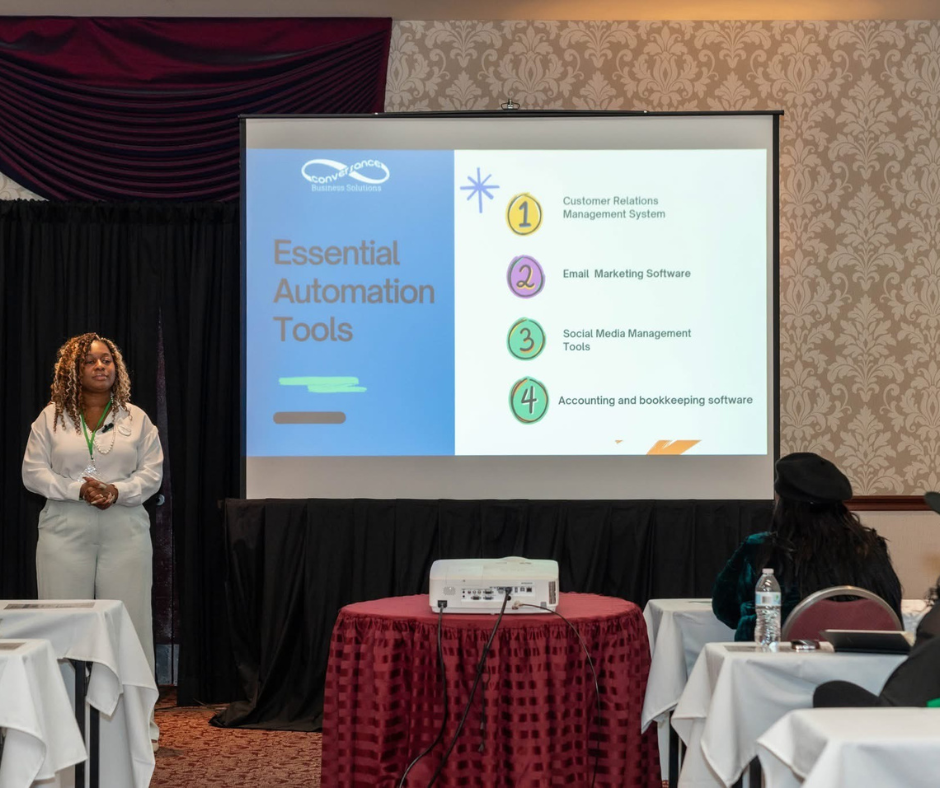
4. Creating Systems That Support Growth — Not Burnout
Systems are the silent backbone of every successful business.
They are how work gets done when you’re not personally involved in every task. They are how businesses scale without collapsing.
Systems include:
- Administrative processes
- Client onboarding workflows
- Scheduling and communication tools
- Financial tracking
- Delegation and support
Without systems, growth becomes exhausting. Every new client feels heavier. Every new opportunity feels overwhelming.
With systems, growth becomes manageable.
January is the time to evaluate:
- What processes feel inefficient?
- What tasks drain my energy?
- What can be automated, delegated, or simplified?
You don’t need to do everything yourself to be a successful entrepreneur. In fact, trying to do everything is one of the fastest ways to stall growth.
January Is Not About Doing Everything — It’s About Doing the Right Things
One of the biggest mistakes business owners make in January is trying to change everything at once.
New offers. New branding. New platforms. New routines.
That approach creates chaos.
Intentional growth requires focus.
This month is about:
- Laying foundations
- Clarifying direction
- Strengthening structure
- Preparing for momentum
When your business has clarity and a roadmap, decisions become easier. You know what to say yes to — and more importantly, what to say no to.
Growth becomes sustainable because it’s supported, not forced.
A New Year Is a Fresh Start — If You Use It Well
The businesses that will thrive this year are not the ones working the hardest. They’re the ones working the smartest.
They’re the ones who:
- Took time to reflect
- Invested in planning
- Built structure before scaling
- Sought support instead of struggling silently
At Conversance, our mission is to help entrepreneurs move from ideas to execution, from hustle to strategy, and from overwhelm to clarity.
This year doesn’t require more hustle from you.
It requires more intention.
And when intention meets structure, growth follows.
We hope these tips were helpful!
Get in touch with us today at 585-484-0038 or support@conversance.biz to learn more about the ways in which our team can help you.